
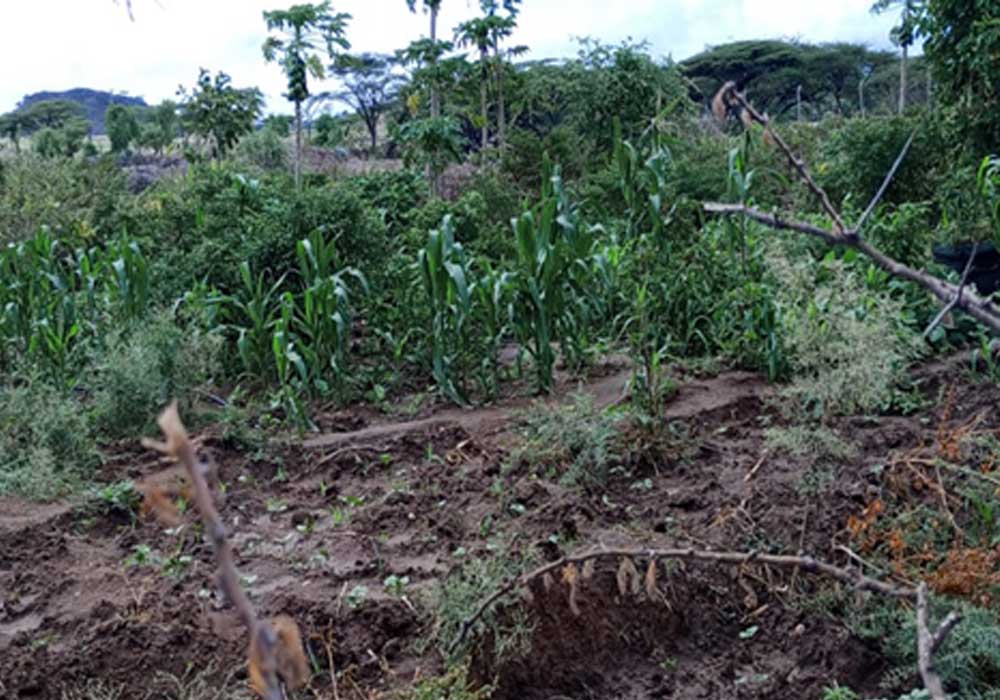
Mpagas community in samburu and nachola community in Turkana are located in North Samburu located in arid and semi-arid lands northern region of Kenya. The primary economic activity is nomadic pastoralism with parts of Samburu practicing agro-pastoralism. They severe lack of enough or no rains since 2018 has led to a steep decline in access to water, alarming rates of food insecurity and heavy strain on livelihoods. The land in both communities is registered group ranch and it’s under these communities and is managed by community committee. There is no natural spring in the area in both communities, there is a seasonal dry river (laaga) is close to the village of Nachola.
Naledi Initiative is working closely with these two communities to establish a sustainable agro-pastoralism in partnership with ESR’s Global Charities from Netherlands which will be demonstration for communities to learn and implement in their homestead. Each community will donate the land where the water will be found for borehole to set up a demonstration farm for crops which resistance to drought. Our intention is to come up with resilient agriculture design.
Some of the crops that can do well are:
- Sorghum
- Green grams
- Cowpeas
- Kale,
- Tomatoes
- Spinach
Resilient agricultural designs, such as sunken beds & vertical bags, are of great importance in semi-arid and arid areas to achieve high yields. These designs offer numerous benefits that address the unique challenges faced by farmers in such environments. Here are the key reasons why resilient agricultural designs are significant:
- Water conservation: Water scarcity is a major concern in semi-arid & arid regions. Resilient designs like sunken beds and vertical bags help conserve water by improving its efficient use. Sunken beds retain water within the depressed planting area, reducing evaporation and runoff. By conserving and managing water effectively, these designs ensure that crops receive adequate hydration for optimal growth and high yields.
- Soil moisture retention: In arid areas, soil can quickly lose moisture due to high temperatures and low rainfall. Sunken beds hold moisture within their depressions, forming a reservoir for plants to access water for a longer period. Consistent soil moisture levels facilitate root development, nutrient absorption, & overall plant health, leading to increased yields.
- Enhanced soil fertility: Arid and semi-arid areas often have poor soil quality, lacking essential nutrients necessary for plant growth. Resilient designs like sunken beds & vertical bags address this issue by incorporating organic matter, compost, and nutrient-rich soil amendments into the planting areas. This improves soil fertility, nutrient availability, and soil structure, providing an ideal environment for plants to thrive and achieve high yields.
- Temperature moderation: Semi-arid and arid regions experience extreme temperatures, which can negatively impact crop growth. Sunken beds, being below ground level, offer insulation that helps moderate soil temperature, protecting plant roots from intense heat and reducing heat stress. By moderating temperatures, these designs create a more favorable environment for plants to grow and increase yields.
- Space optimization: Land availability is often limited in semi-arid and arid areas. Resilient designs like sunken beds and vertical bags optimize space utilization and maximize crop yields. Sunken beds allow farmers to grow crops in smaller areas by utilizing the vertical depth of the soil, increasing planting density. Vertical bags are designed to enable vertical farming, making efficient use of vertical space and allowing for larger crop volumes within a smaller footprint.
In conclusion, resilient agricultural designs such as sunken beds and vertical bags are of great importance in semi-arid and arid areas, as they address challenges related to water scarcity, soil quality, temperature, and space limitations. By promoting water conservation, retaining soil moisture, enhancing soil fertility, moderating temperatures, and utilizing space effectively, these designs help farmers achieve high yields and contribute to food security in challenging environments.

 and Turkana (Nachola) Communities.)
No comment