
2018 Naledi Initiative was born out of pain of sexual and emotion abuse, witnessed by the founder, with main aim of healing journey and empowering women who have gone through abuse. The intention was to create an opportunity for teenage mothers and women to heal from the emotional and physical wounds caused by trauma; create a safe environment for these young women to express unspoken pain through storytelling; engage in sharing stories and community building so that they may begin to cultivate resilience, hope and a deeper sense of purpose to thrive in life.
Majority of teenage mothers and women in Kenya, especially in marginalized communities, drop out of school in primary and secondary school and never return to formal education. Due to the cultural stigma, the trauma and isolation that it creates, many of these young women have limited support systems and are forced into unstable home environments with limited economic opportunities. They are more likely to be unemployed or under-employed and their children are at increased risk for abuse and neglect, and are less likely to attend school.
In most semi-arid areas of Kenya like Tharaka community, women tend to go through a lot of hardships because of the patriarchal nature of the society. Some go through abuse and other harmful cultural practices which degrade them.
To elevate and cement the status of a woman in these communities, empowerment like financial independence and such social-economic freedom is very important. In most African families the mothers are the pillar of the family. They take care of every person in the household including their domestic animals and ensures that the family thrives. If woman is empowered socially and economically the entire family and community will benefit. Hence, it is our goal at Naledi Initiative, to raise the living standards of women in Tharaka community through our sustainable economic interventions.
Working closely with these women have inspired them to transform their lives through attaining skills that equip them to move from mere survival to thriving lives.
Together with community Naledi has developed Community Empowerment Program Model (CEPM), for social economic impact with the following three goals:
- Healing and creating awareness on the harmful cultural practices and fight against them.
- Advocacy and awareness of 19 human rights in their communities.
- Find a sustainable way of making the women financially independence and social-economic freedom
Projects under implementation are:
- Women Table Banking
Our table banking model convenes communities of women by pooling their resources to improve livelihoods.
Women table banking is a group-based resource mobilization model in which a group members meet once per week to save money and borrow. During gathering, each member places their savings on the table, from minimum amount to any amount decided by the group. As an example, members of the group can borrow money placed on the table immediately, to pay school fee for their children or to buy food or to boost their income generating livelihoods.
- Social Entrepreneurship Empowerment
Naledi Initiative addresses women’s social-economic freedom by training them entrepreneurship skill and small seed funds grant of $ 155 to each member of self-help group for start-up of their small social enterprise in their rural communities. In this program, we have discovered that women are more likely to be social entrepreneurs and often do so for much more than just financial reasons.
- Trees for livelihood Initiative
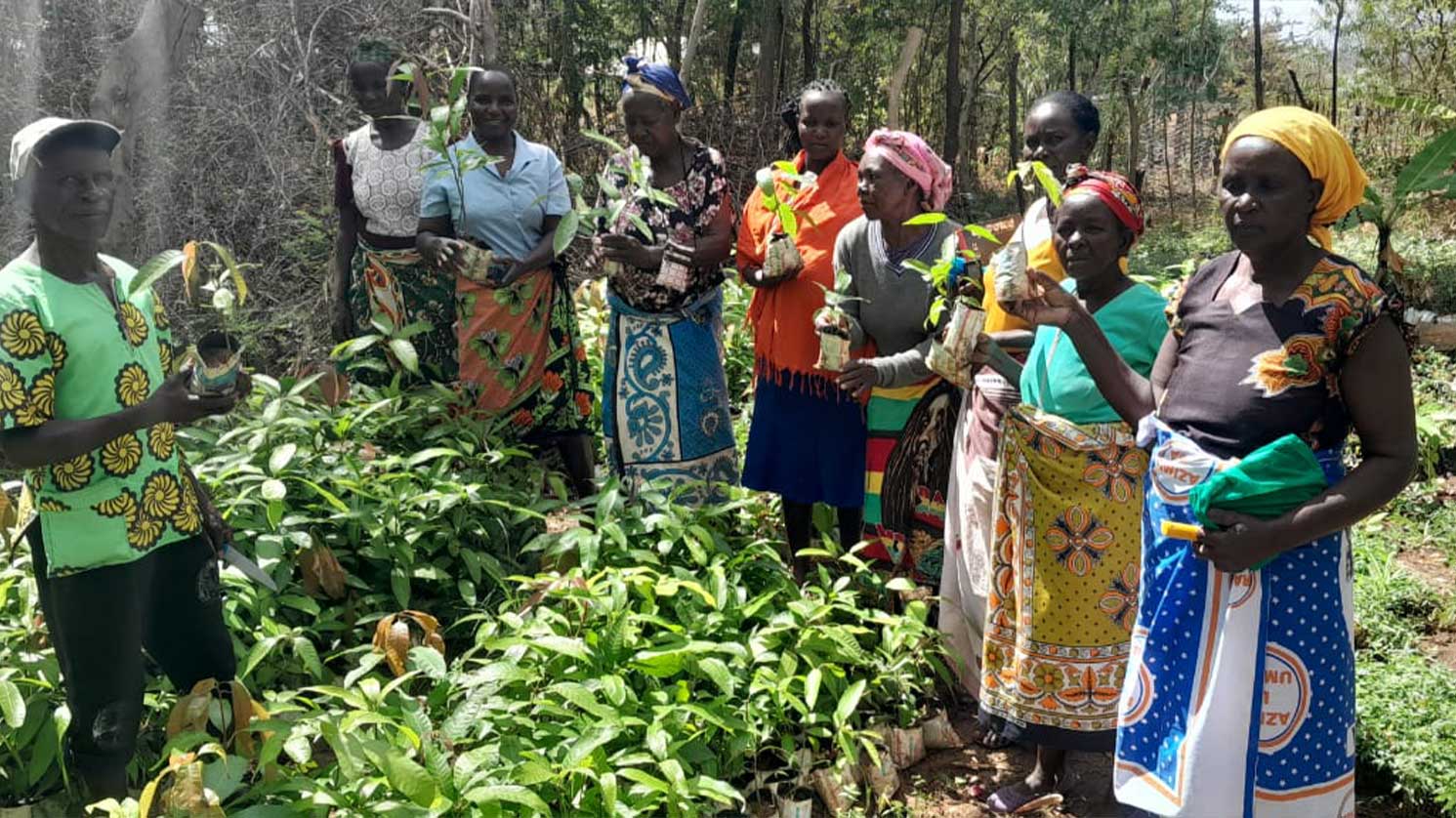
Trees for livelihood Initiative is a program implemented by Kamatungu Mothers self-help group in Tharaka Community supported by Naledi Initiative.
Kamatungu mothers meet once per week under a tree as “to water their seedlings in one of home of their member” who have offered a space to do the nursery for their seedlings.
They sell seedling to their neighbors and friends as income generating activities for their livelihood as they take care of mother earth.
Women in Tharaka community do not inherit or own land. Traditionally, males receive land inheritances. Planting trees gives women the ability to break the dominance of male landowners and take an active role in caring for their families’ and communities’ property.
“I have witnessed the pain of the bleeding wounds, the cry of my late mother, and my two sisters who were both sexually, physically and emotionally abused when they were teenagers; isolated, stigmatized and traumatized by the society. I have witnessed the suffering of young women in my community from Female Genital Mutilation (FGM), dropping out of school, early and forced marriages and gender-based violence. My calling is to be a male voice and support system for women by creating a space for them to learn how to heal their wounds and in turn they become healers; as well as work with men to break this cycle of gender-based violence perpetrated by them.” Robert Murithi Kamwara


No comment